
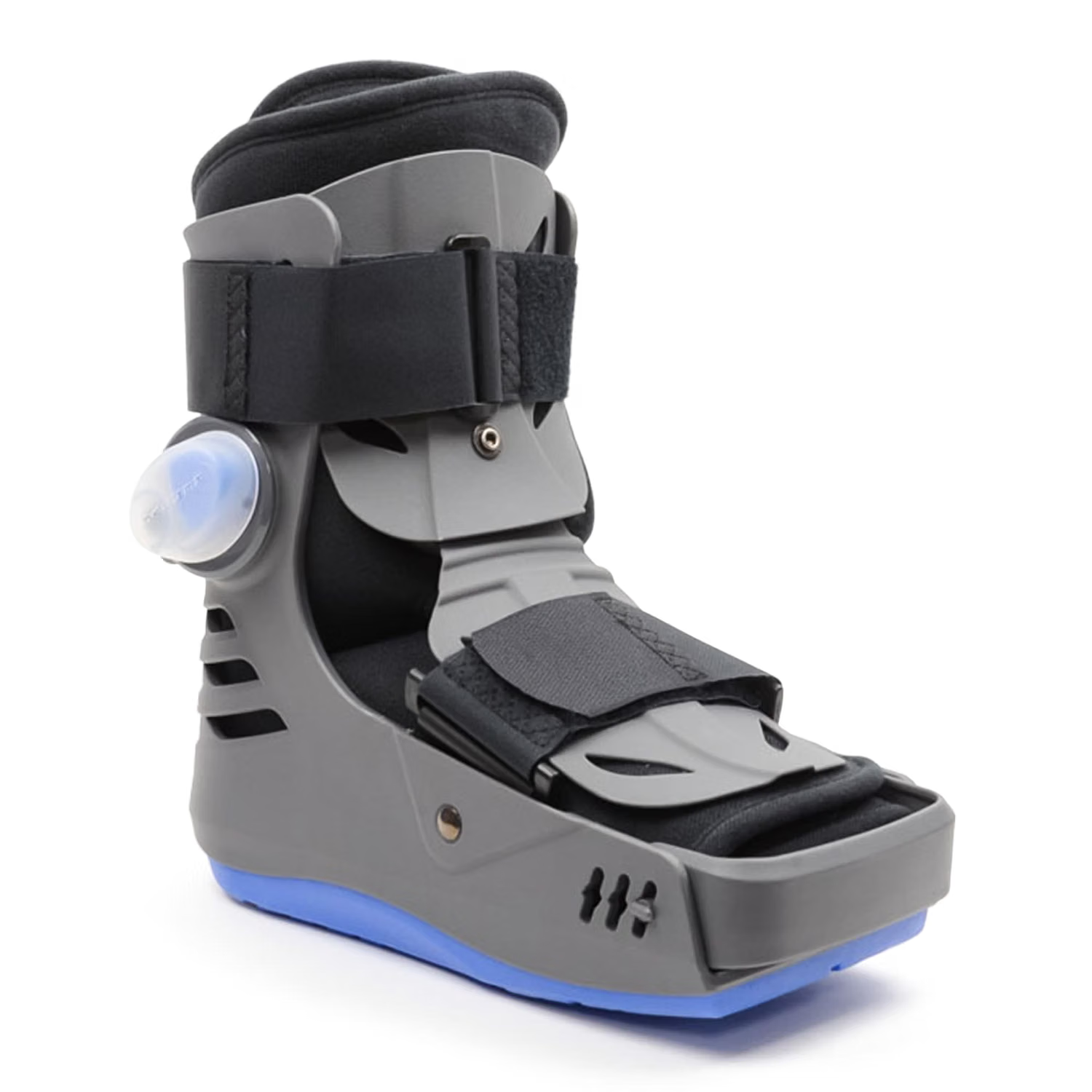
Short Immobilisation Boot
Ad: most product links on this site are affiliate links. We earn a commission if you buy through them, at no extra cost to you. See our affiliate disclosure for details.
I use a short immobilisation boot for more severe plantar fasciitis, or for people who simply can’t reduce their load because of work or other factors. By preventing all ankle movement, it minimises the load through the plantar fascia. It’s worn for all weight-bearing activities, usually for about 6 weeks at a time.
It can also be used for post-surgical foot immobilisation. The longer version of the same boot can be used for ankle immobilisation and Achilles tendon injuries.
How I’d use it
- Wear it for all weight-bearing activities, for about 6 weeks at a time
- Take it off to sleep, to drive, and for extended periods of rest when you’re not weight bearing
- Otherwise it’s worn all the time
What I like
- A rigid shell that stops ankle movement, which takes load off the plantar fascia
- Two air cells that you can inflate to adjust the fit and the pressure
- Removable, washable liner
- Curved, anti-skid sole that makes walking more natural
- Adjustable toe guard
- A CE-marked medical device, available in short and long versions
- Comes in several sizes (this listing is XS)
Things to know
- Check the size before ordering, and make sure you have the short version for the foot, not the long version.
- It’s a big step, so it’s for more severe or stubborn cases. For milder plantar fasciitis, start with insoles and load management.
- Your other leg ends up longer than the boot side, which can cause hip and back aches. A raised shoe or an evener on the other foot can help.
- Prolonged immobilisation can cause calf and foot muscle weakness and stiffness, so it’s best to return to normal shoes and exercises gradually after the 6 weeks.
- Take it off and get checked if you notice calf pain or swelling, redness, numbness, tingling, skin sores or colour change.
- Don’t drive in it. Take it off first, as you would for sleeping.
- Use it with guidance if you can, especially after surgery, when your surgeon’s advice comes first.
Who it suits: people with severe plantar fasciitis who can’t reduce their load, or who haven’t improved with other treatments, and people who need foot immobilisation after surgery.
Compare with: insoles and night splints, which I’d usually try first.
Read my article on plantar heel pain (plantar fasciitis) or watch my video.