
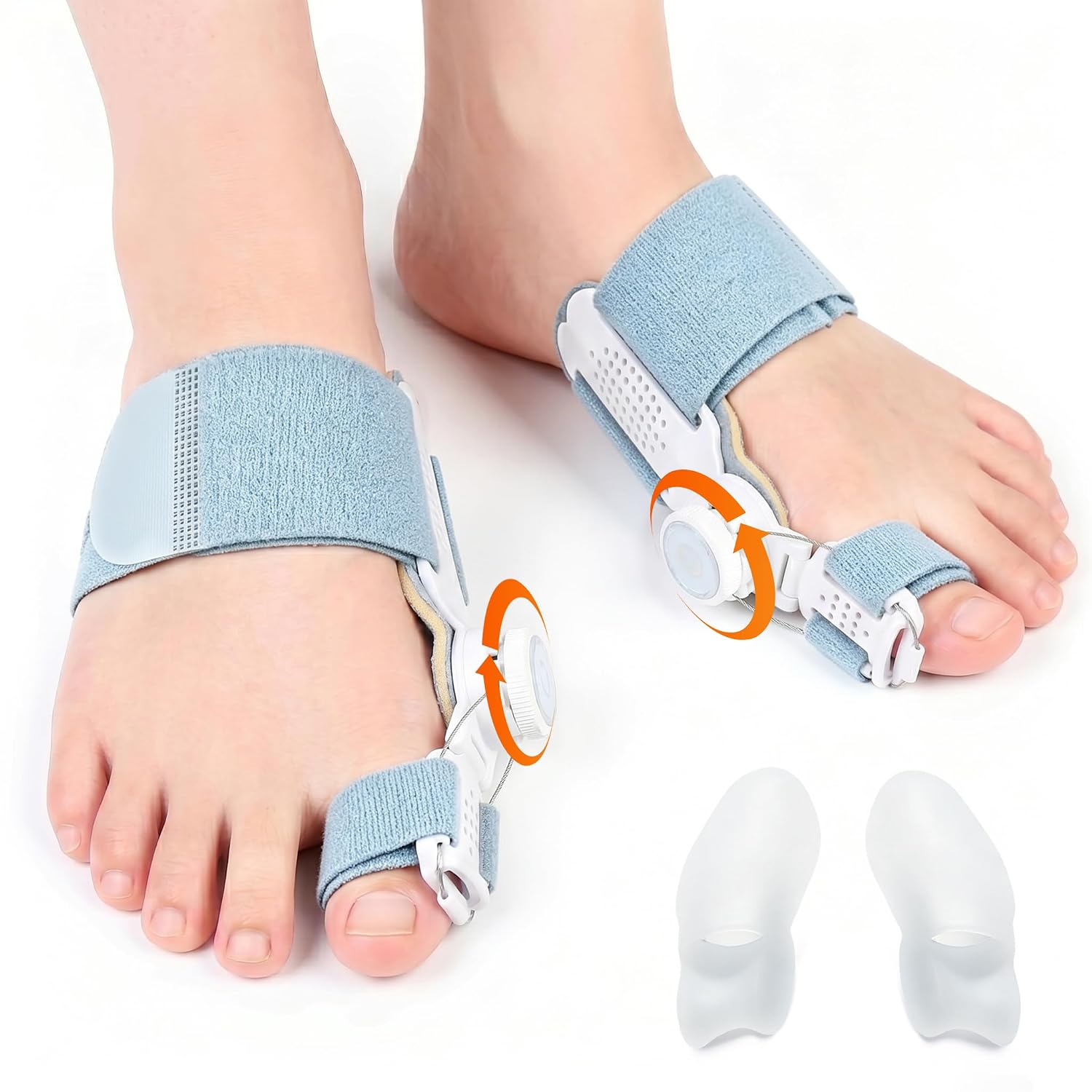
Bunion Alignment Corrector
Ad: most product links on this site are affiliate links. We earn a commission if you buy through them, at no extra cost to you. See our affiliate disclosure for details.
A bunion corrector can be useful for a mild hallux valgus (bunion) that’s still passively correctable. You use it at rest, starting with 10 minutes and slowly building up to about an hour at a time. A simple test: if you can straighten the big toe with your hand, it may still respond to this kind of device. If the toe can’t be corrected by stretching it with your hand, it has probably gone too far for this device to help.
What I like
- Adjustable, with a hook-and-loop strap and a knob that lets you adjust the amount of correction
- Padded lining for comfort
- Fits either foot, and works for most foot shapes
- Includes soft silicone toe separators that can also be worn in shoes
- Easy to clean and reusable
- You get a pair
Things to know
- Use it at rest, not for walking. Build up gradually: 10 minutes at first, then up to about an hour at a time.
- Make a gentle adjustment. Don’t force the toe into position, and stop if it hurts, or if you get numbness, tingling or skin marks.
- Correctors can ease discomfort and keep the toe supple, but they don’t permanently change the bone. Evidence for them is limited, so it’s best to be realistic about what to expect.
- If the toe is stiff and fixed, or the bunion is large or painful, a corrector is unlikely to help. Wider shoes, a toe separator or a professional assessment may be better.
- The toe separators are for use with shoes during the day. The corrector itself is for rest periods.
- If your foot is red, hot or swollen, or the pain is getting worse, get it assessed.
Who it suits: people with a mild, flexible bunion who want to try a simple, low-cost device at rest, and who understand its limits.
Read my article on hallux rigidus or watch my video.