
By Stephen Bunting, Specialist MSK Physiotherapist
A ganglion cyst is by far the most common lump found around the wrist and hand. Although ganglions can look alarming, they are almost always harmless. This article explains what a ganglion is, why it develops, how it is diagnosed, and the treatment options available, including the different types of ganglion that occur in the fingers.
The information can also be seen in video format below
A Word of Caution First
The vast majority of lumps and bumps in the hand and wrist are benign (non-cancerous). Malignant (cancerous) lumps in the hand are very rare, but they do occur. Any new lump should be checked by a healthcare professional, particularly if it:
- is growing rapidly
- is very painful
- has caused the skin over it to become discoloured
What Is a Ganglion Cyst?
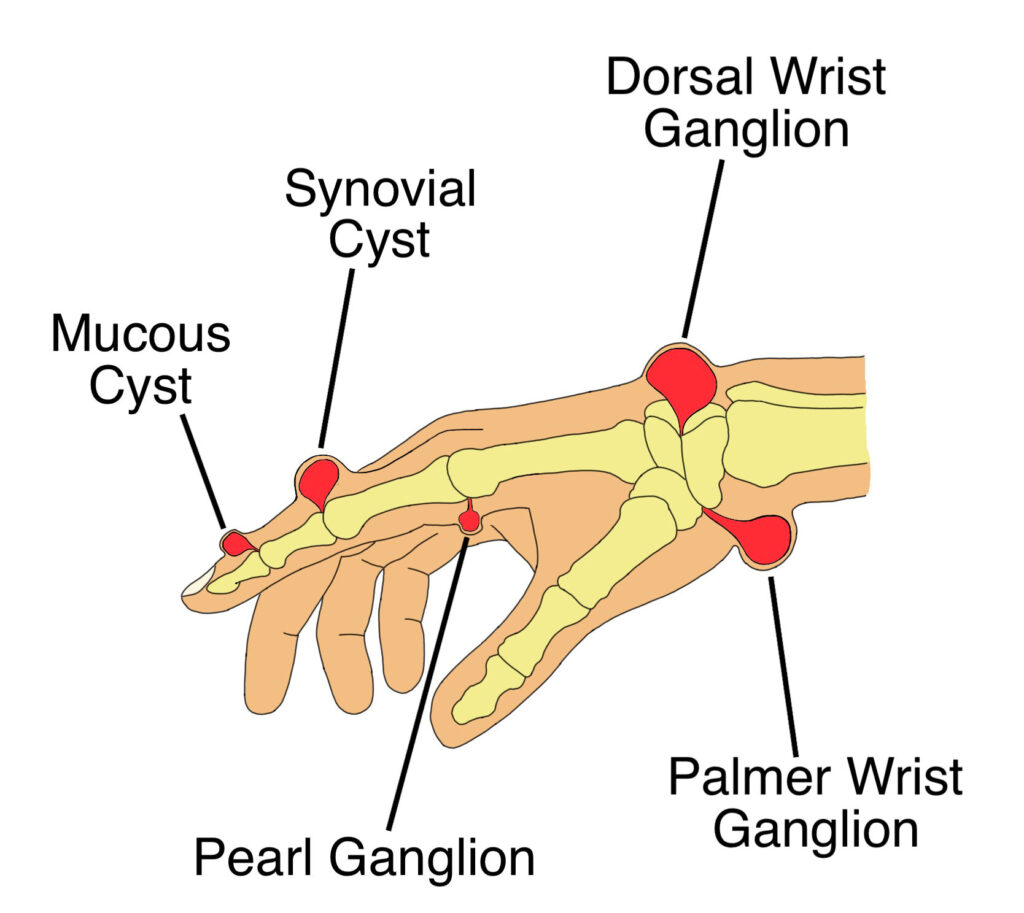
A ganglion is a round or oval fluid-filled lump that most commonly appears around the wrist, either on the back of the wrist or on the palm side. Depending on how much pressure the fluid inside is under, a ganglion can feel quite firm or fairly soft.
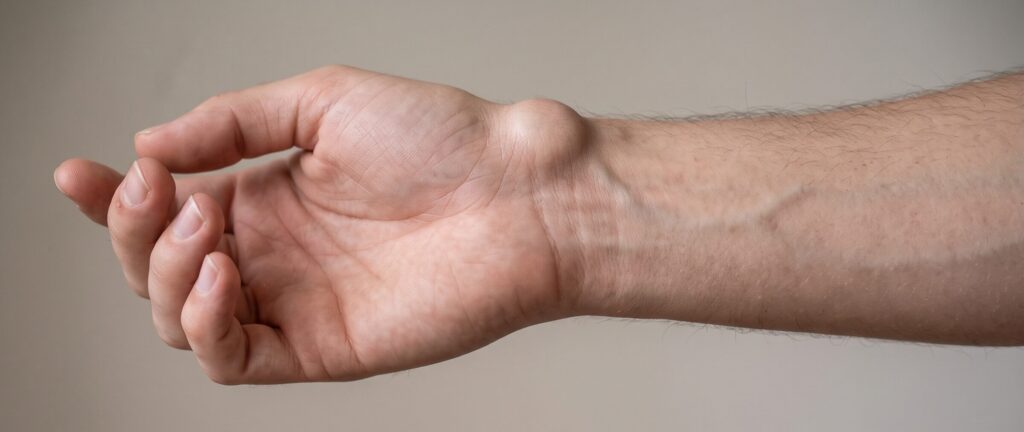
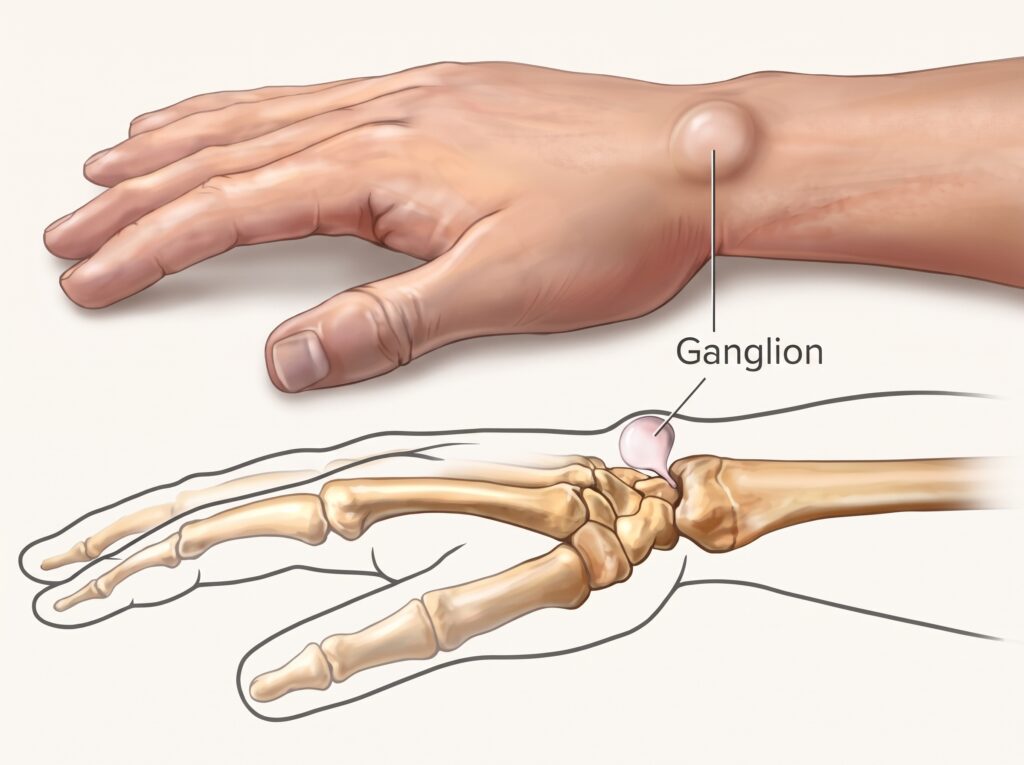
The fluid inside a ganglion comes from synovial fluid, the normal lubricating fluid that bathes the joints of the wrist. This fluid is normally held within the joint by a lining called the joint capsule. Sometimes an area of the capsule weakens and develops a bulge, and fluid collects inside it. In medical terms, a ganglion is a herniation of the joint capsule. Put simply, it is normal body fluid that has ended up in the wrong place.
Occasionally, multiple ganglions can stack on top of, or adjacent to each other which is called a multilobulated ganglion.
Symptoms
Ganglions are often not painful. The most common complaints are:
- dislike of the way the lump looks
- the lump catching or getting in the way during everyday activities
For most people, a ganglion is more of an annoyance than a medical problem. However, a ganglion can sometimes press against pain-sensitive structures such as nerves or tendons, which can make it painful. Larger ganglions can also interfere with wrist movement and tend to be more uncomfortable than smaller ones.
Size on the surface can be deceptive. Some ganglions that look quite small are in fact much deeper and more extensive underneath, rather like an iceberg. If a small ganglion is far more painful than you would expect, it is worth having it checked.
Who Gets Ganglions, and Why?
Anyone can develop a wrist ganglion, but they are more common in women and in young adults. Why they develop in some people and not others is largely unknown.
When I assess a wrist ganglion, I will usually arrange an X-ray to check for arthritis or any other joint problem that might be driving the production of excess joint fluid. In the vast majority of cases, however, the X-ray is completely normal and no underlying cause is found.
Diagnosis
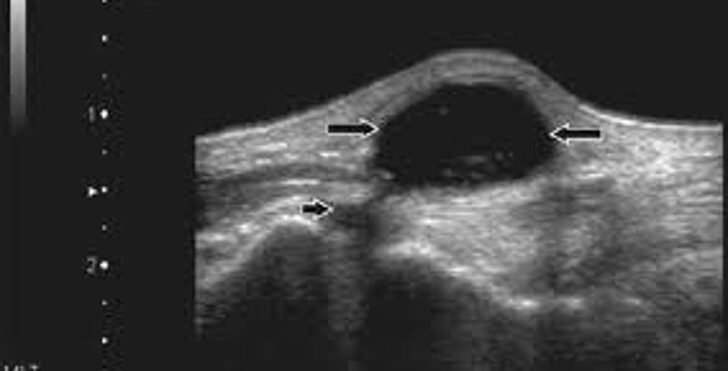
Most ganglions can be diagnosed by their typical appearance and feel, and no further imaging is needed. If a ganglion is particularly painful, or does not fit the typical picture, an ultrasound or MRI scan can confirm the diagnosis and show its exact size and location.
Treatment Options
1. Leaving It Alone
A ganglion is harmless, so if it is not causing much pain, leaving it alone is a perfectly reasonable choice. Many ganglions go away on their own over time, although some do not.
2. Needle Aspiration
If a ganglion is painful or bothersome, draining it with a needle (aspiration) is a good first option. It is simple and safe, and it does not leave a scar.
The area is first numbed with local anaesthetic. A larger needle is then used to draw out the fluid, which is typically clear and jelly-like. Sometimes the ganglion needs to be gently squeezed to remove the last of the fluid. In most cases, the procedure is quick and straightforward.
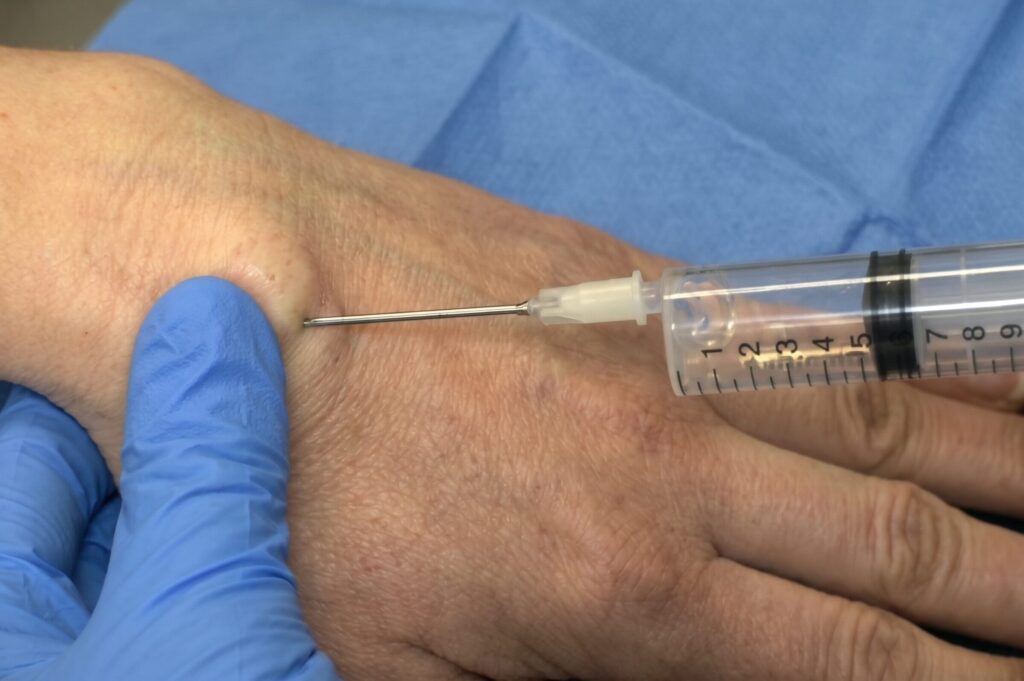
For ganglions on the palm side of the wrist, ultrasound guidance is advisable, as the wrist arteries often lie close by and need to be avoided.
The main drawback of aspiration is that the ganglion can refill, so it may need to be drained more than once before it settles. My own approach is to try up to three aspirations before considering a referral for surgery.
3. Surgery
Surgical removal has a higher success rate than aspiration, but it does leave a scar. This is an important consideration if the ganglion is being removed purely for cosmetic reasons, as it may simply mean swapping a lump for a scar. Ganglions can also occasionally return after surgery, so there is a small chance of ending up with both.
A Note on the “Bible Treatment”
The old-fashioned remedy of striking a ganglion with a heavy book, traditionally a Bible, should be avoided. It may burst the ganglion, but it can also cause other injuries that are much harder to treat. Also, if the ganglion does not burst, it can be pushed deeper into the wrist where it can cause more pain.
Ganglions in the Fingers
Ganglion-type cysts can also occur in the fingers, where they have different names depending on their location.
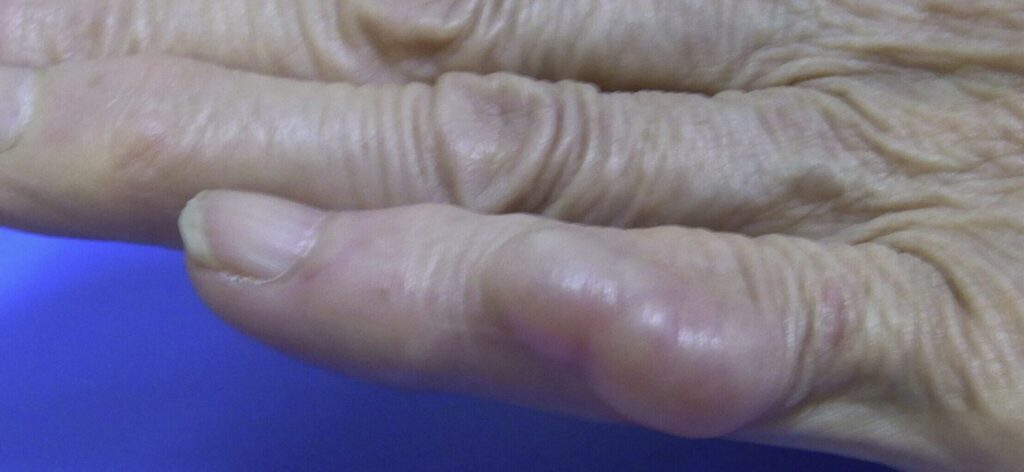
Synovial Cysts
These occur over the middle joints of the fingers. They are typical ganglion cysts arising from the capsule of the finger joints.
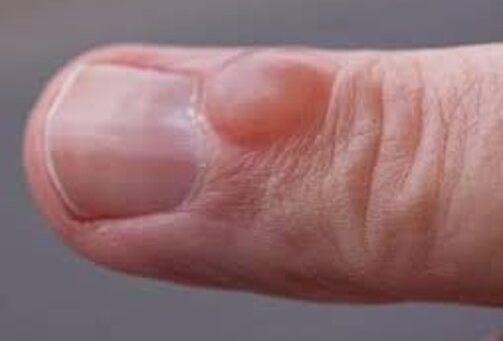
Digital Mucous (Myxoid) Cysts
These occur over the end joint of the finger, near the nail. They are usually caused by osteoarthritis of the joint underneath. Arthritis roughens the bone, which gradually wears a hole through the joint capsule, allowing fluid to escape and build up under the skin.
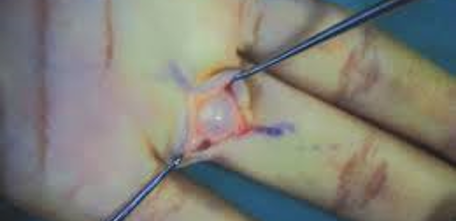
Pearl Ganglions
These are small, firm lumps on the palm side of the finger, usually near the skin crease at the base of the finger. They are named for their feel, which is like a hard pearl, and they look like one when removed.
Treating Finger Cysts
All of these finger cysts can be drained with a needle. Pearl ganglions respond particularly well. The procedure takes only a few seconds and often resolves the problem for good.
Digital mucous cysts are the exception. They don’t respond as well to aspiration and usually do better with surgery, because the surgeon can smooth off the roughened bone underneath before removing the cyst, making it less likely to return.
Digital mucous cysts should never be pierced at home. They sit close to the nail, which usually harbours unseen dirt and bacteria (especially false nails), so the risk of infection is high. An infected finger joint is a serious problem which can be very painful and often needs hospital treatment.
Common Questions
1. Will my ganglion go away on its own?
Many ganglions shrink or disappear without treatment, although this can take months or years, and some might never go away. If your ganglion is not painful, waiting to see what happens is a reasonable approach.
2. Could my lump be cancer?
Cancerous lumps in the hand and wrist are very rare, and the vast majority of lumps are harmless ganglions. However, any lump that is growing rapidly, is very painful or is causing skin discolouration should be checked by a healthcare professional.
3. Can I burst or drain a ganglion myself?
No. Hitting a ganglion can cause other injuries, and piercing one at home carries a real risk of infection, particularly with cysts near the fingernail. If you want a ganglion drained, have it done by a trained clinician under sterile conditions.
4. Will it come back after treatment?
It can. Ganglions commonly refill after needle aspiration, which is why more than one aspiration is sometimes needed. Surgery has a lower recurrence rate, but even surgically removed ganglions can occasionally return.
5. Do I need a scan?
Usually not. Most ganglions can be diagnosed from their appearance and feel. An X-ray may be used to check the joint underneath, and an ultrasound or MRI scan is helpful if the lump is unusually painful or does not look like a typical ganglion.
Summary
- A ganglion is a harmless, fluid-filled bulge from a joint lining, most commonly found around the wrist.
- Many cause no pain and may go away on their own; leaving them alone is a reasonable option.
- Painful or bothersome ganglions can be drained with a needle, although they may refill and need repeat aspiration.
- Surgery has a higher success rate but leaves a scar, and recurrence is still possible.
- In the fingers, pearl ganglions respond very well to aspiration, while digital mucous cysts near the nail usually do better with surgery.
- Never hit or pierce a ganglion yourself, and have any rapidly growing, very painful or discoloured lump checked by a professional.
This article is for general information only and does not replace individual assessment. Start any exercise gently and stop if your symptoms worsen significantly. If you have severe or rapidly worsening symptoms, or you’re concerned about your health, please seek urgent advice from a qualified healthcare professional. See our full disclaimer for more information.