
By Stephen Bunting, Specialist MSK Physiotherapist
A cortisone injection is one of the most commonly offered treatments for painful joints and soft tissues, including the shoulder, knee, elbow, hand and foot. It is also one of the most misunderstood. Many people worry that it is only a temporary fix, that it may cause harm in the long term, or that it is being offered before other treatments have been given a proper chance.
This article explains what a cortisone injection does, which conditions it can help, what it cannot fix, and the questions I am asked most often. It also sets out a simple framework to help you decide whether an injection is appropriate for you.
The information can also be seen in video format below.
What Does a Cortisone Injection Actually Do?
Most joint and soft tissue injections contain a corticosteroid, which is a powerful anti-inflammatory medication. The term “cortisone injection” is commonly used to describe any corticosteroid injection. The drugs most often used include triamcinolone and methylprednisolone, and they are usually mixed with a local anaesthetic.
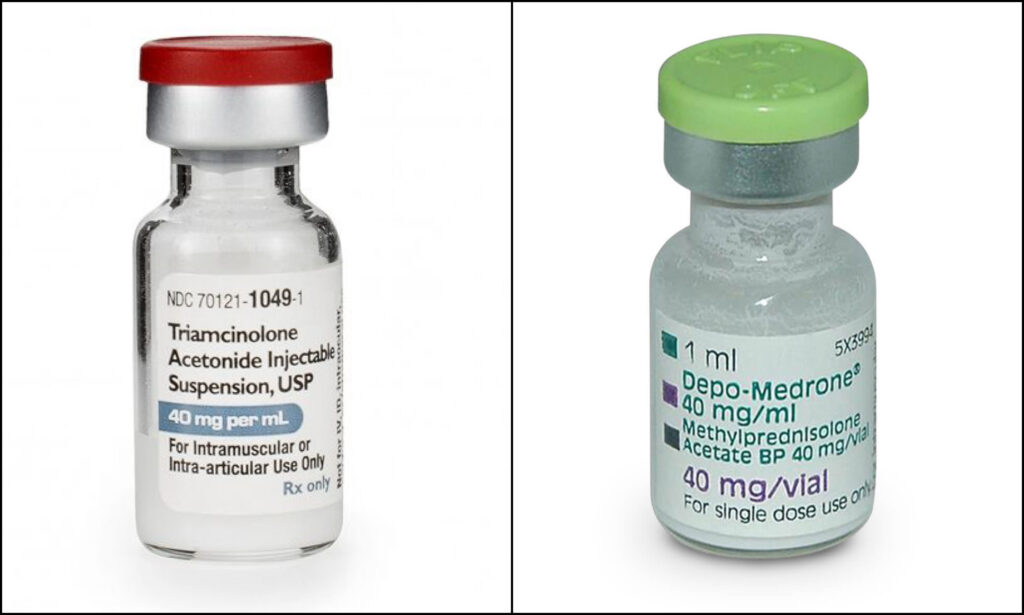
Corticosteroid reduces inflammation at the site of injection, whether that’s a joint, a bursa, or the tissue around a tendon or nerve. The local anaesthetic provides immediate, short-lived pain relief. It also has a diagnostic value: if your usual pain disappears completely for a few hours afterwards, this is a strong indication that the correct structure has been injected.
The steroid then reduces inflammation over the following days and weeks. It does not repair torn tissue, regrow cartilage or strengthen anything. It is an anti-inflammatory treatment that can reduce pain and swelling.
What Can a Cortisone Injection Help With?
Injections tend to work best where inflammation is a major driver of the pain. Conditions that commonly respond include:
- Frozen shoulder, particularly in the early painful freezing stage
- Subacromial shoulder pain
- Carpal tunnel syndrome
- Trigger finger
- Inflammatory flare-ups of osteoarthritis in joints such as the base of the thumb, the hip or the knee
Trigger finger is one of the best examples. A single, well-placed injection can fully resolve the problem in a large proportion of people, with no further treatment required.
For most other conditions, the aim of an injection is to reduce pain and inflammation enough to improve movement and sleep, and to allow you to complete the rehabilitation exercises that bring longer-term benefit. It is best thought of less as a single treatment and more as a “window”: a period of reduced pain in which you can move and function more normally, which supports genuine recovery.
What Won’t a Cortisone Injection Fix?
A steroid injection cannot fix a structural problem. Conditions such as a torn rotator cuff tendon, degenerative cartilage in an arthritic joint, or a tendon problem like tennis elbow are driven more by tissue injury or degeneration than by active inflammation. An injection will not repair these. It may reduce the pain for a time, but the underlying problem remains once the effect wears off.
It also does not address how a joint is being used. If weakness, stiffness or a movement pattern problem is contributing to your symptoms, an injection on its own will not change this. For that reason, injections work best as part of a wider plan that includes exercise and rehabilitation, rather than as a replacement for it.
For some tendon conditions, tennis elbow being the classic example, research suggests that an early steroid injection can lead to worse outcomes at one year than simply waiting and doing a structured exercise programme. The short-term relief is real, but it may come at the cost of slower long-term recovery, possibly because reduced pain lessens the motivation to complete the rehabilitation that actually resolves the problem.
How Do You Decide Whether an Injection Is Right for You?
Six questions are worth working through before making a decision.
1. Have you given conservative treatment a fair try?
A fair trial means a guided programme over several weeks, not a few exercises over a few days. For most mechanical and degenerative conditions this should come first, with an injection used to support the process if progress stalls, rather than replacing it from the outset.
2. How much is it affecting your life?
Severity matters. Pain that prevents sleep, or a frozen shoulder that leaves you unable to dress, is a different situation from a mild ache that is annoying but manageable. The greater the impact, the more reasonable it is to use an injection earlier to create a window of relief.
3. Is the diagnosis clear, and does the injection target the right structure?
An injection is only as good as the diagnosis behind it. Where there is genuine uncertainty about the source of pain, a diagnostic injection may be the better option. This contains no steroid. Local anaesthetic alone is injected into the tissue suspected of causing the pain, and the response is assessed. If your familiar pain disappears for a few hours, the diagnosis is confirmed. If there is no relief at all, the diagnosis may be wrong and further investigation may be needed.
4. What does the evidence say about your condition?
The evidence varies considerably between conditions.
- Trigger finger and frozen shoulder tend to respond very well.
- Tendon conditions such as tennis elbow give much more mixed results.
- Joint osteoarthritis sits in between. Injections can give worthwhile short-term relief, but they do not slow the underlying arthritic process, and some research suggests that frequent, repeated injections into the same joint may accelerate cartilage loss.
5. Are there other factors that could affect the result?
Diabetes is one. Steroid injections tend to be less effective in people with diabetes, particularly if it is poorly controlled. The number of injections you have already had in the same area is another. As a general rule, I advise caution about having more than around three injections into the same region within a year.
Internal link: Diabetes and MSK Problems article
6. What are you hoping the injection will achieve?
An injection is a good choice if you are looking for a window of reduced pain to help you move and engage properly with rehabilitation. It is less likely to satisfy you if you are hoping it will remove the need for rehabilitation altogether. For many conditions, an injection is not a cure.
Risks and Side Effects of Cortisone Injections
Common Side Effects
- Post-injection flare. A short flare-up of pain in the first day or two is common. It usually settles within 24 to 48 hours. It tends to be more noticeable in smaller joints, because the joint capsule contains many pain nerves and is stretched as the injection fills the joint, and a small joint needs very little volume to cause this. For this reason, care is taken with the small joints of the hands and feet not to inject too much fluid. If a joint is very swollen, often a knee, fluid is usually drained off before the injection is given.
- Facial flushing. Some people experience a temporary hot flush in the cheeks for a day or two.
- Raised blood sugar. In people with diabetes, blood sugar may rise temporarily for a few days. It is worth planning for this with your diabetes team if needed.
Less Common Risks
- Skin changes. With more superficial injections, such as those around the outside of the elbow or around tendons in the hands and feet, there is a small risk of localised skin thinning or a patch of lighter skin at the injection site.
- Tendon weakening or rupture. If steroid is injected near to a tendon, there is a risk of weakening that tendon and, rarely, causing it to rupture. This is most relevant with weight bearing tendons such the achilles and the patellar tendon. Care is therefore required when injecting around tendons.
- Infection. This is the most serious risk, but it is very rare when the injection is performed using proper sterile technique.
Signs of Infection: Seek Urgent Help
If an infection develops, a few days after the injection, when pain should be improving, it will instead become much worse. There is often swelling and redness, and the area feels hot. You may also feel unwell and feverish. Infection is an emergency, particularly in a joint. If you have any doubt, go to your local emergency department.
What Does the Research Show?
For most of the conditions treated with injections, the research shows a consistent pattern: good evidence of benefit in the short term, typically from a few weeks up to about three months, with the effect diminishing by six to twelve months.
This does not mean injections are not worthwhile. A few months of significantly reduced pain can make a major difference, particularly if sleep is disturbed, or if it provides the opportunity to make progress with a rehabilitation programme that previously felt impossible. It does mean that expectations about the duration of benefit should be realistic, and that there should be a plan for what happens once the effect wears off.
Common Questions About Cortisone Injections
1. How quickly does it work?
Usually about two to three days for the steroid to start working and for symptoms to improve. Sometimes the effect begins on the same day, and sometimes it can take a week or two. The speed of response depends on the type of injection, the drug used, and how each individual’s physiology reacts to the steroid.
2. Will it cause weight gain?
No. Steroid tablets can cause weight gain when taken over the long term, but the small doses used in injections do not cause weight gain.
3. Does the needle go into the bone?
No. The aim is to avoid bone. In a joint injection, the needle is directed into the space between the bones.
4. Will it hurt?
For most injections, the discomfort is similar to having blood taken: a quick, sharp scratch. Completely pain-free injections are not yet possible, but it is very rare for someone to tell me it was worse than expected. The experience does depend on the individual, the skill of the person performing the injection and the area injected.
5. Can I drive afterwards?
Legally you probably can, but it is generally not advisable, particularly if local anaesthetic has been used. This is because the injected area may feel numb for a few hours which can reduce reaction times. In UK law, you are expected to judge whether you can safely control the vehicle, which in practice means being able to turn the wheel quickly to avoid an obstacle or to make an emergency stop. If you intend to drive, it is worth checking with your insurance company, as they may have grounds not to cover you in the event of a crash. The safest approach is not to drive on the day of the injection.
6. Can it make me worse in the long term?
It can, but only if there is an unforeseen complication, such as the needle piercing an unintended structure, an infection or tendon rupture, and these are very rare. Having too many injections into the same site over a short period can also affect tissue health and slow healing. It is the responsibility of your clinician to ensure the doses and frequency of injections are safe and suitable for you.
7. What if it has no effect?
There are several possible reasons, including poorly controlled diabetes or other chronic medical conditions that can reduce the effect of steroids. In most cases, however, if an injection has no effect at all, either the diagnosis was incorrect or the injection missed its target. This leads to the final question.
8. Is it better to have the injection image-guided?
As a physiotherapist and sonographer I regularly provide ultrasound-guided injections. Before completing my ultrasound training, all of my injections were performed unguided, so I can offer an honest opinion.
If you are offered an ultrasound-guided injection, I would choose it in preference to an unguided one, because accuracy is much more reliable. For large joints and easy-to-feel targets, such as the knee, tennis elbow, the outside of the hip and trigger finger, guidance matters less.
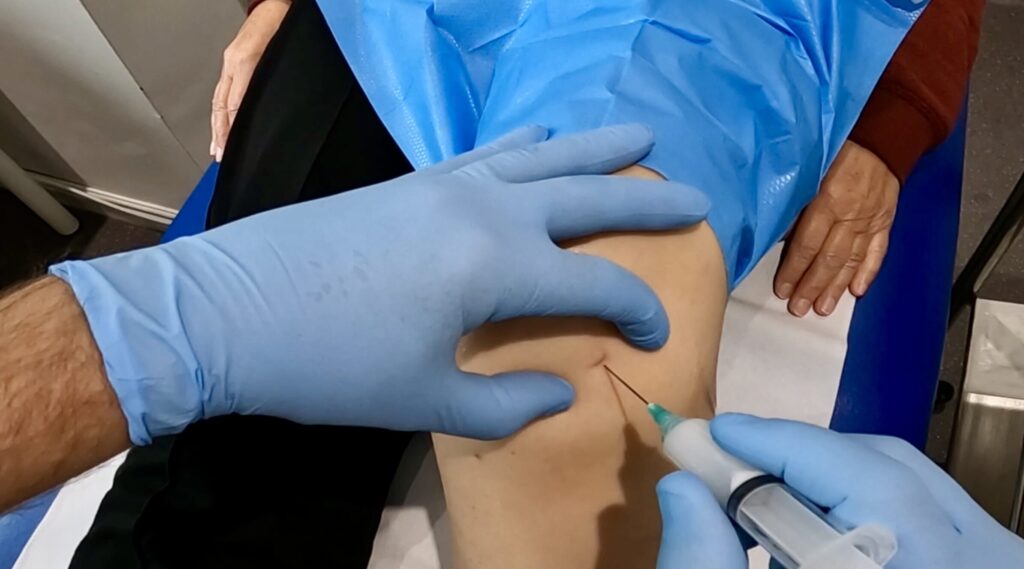
For smaller joints, deeper targets, or nerves (which should be injected near but never directly into), guidance is generally better. I would always use guided injections for:
- Small joints of the hands and feet
- Carpal tunnel syndrome
- The hip joint, where important nerves and blood vessels need to be avoided
- Shoulder injections that target precise tissues, such as a bursa, the small AC joint, or when trying too get the needle beneath the stuck-down capsule in a frozen shoulder
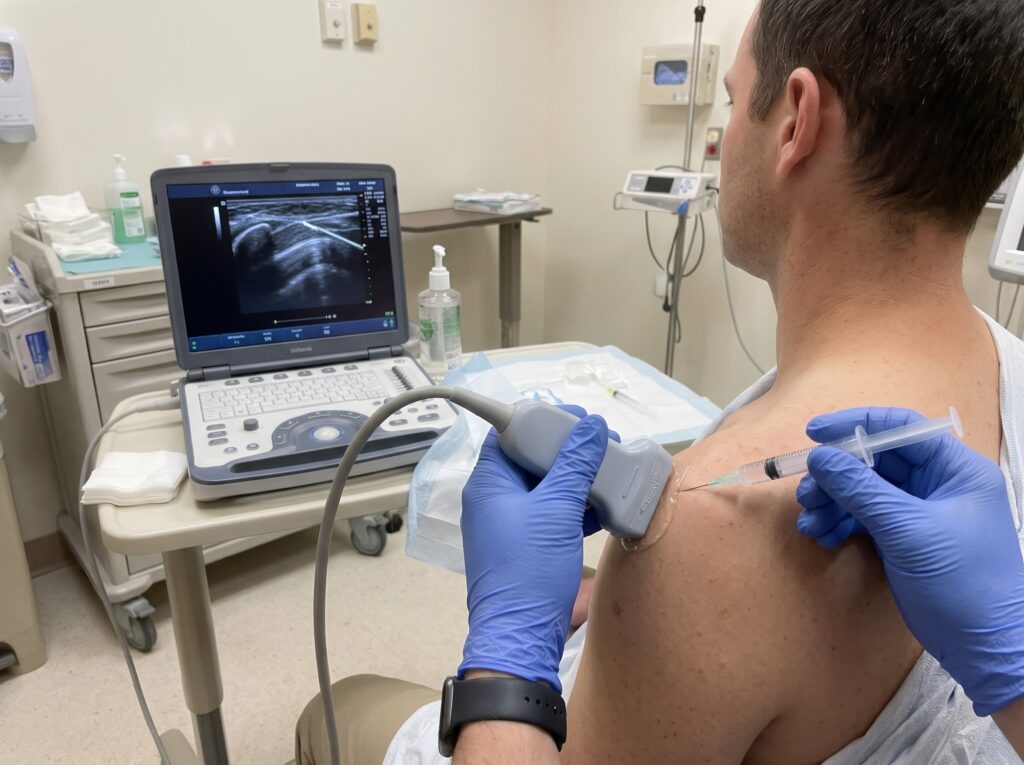
If image guidance is not offered or not available, an unguided injection is often perfectly acceptable, particularly in the hands of a skilled and experienced injector. The research generally shows little difference between guided and unguided injections for most conditions, but in my practice, I get better results, with less side effects and complications when using image guidance.
Summary
A cortisone injection is a useful treatment. It reduces inflammation and can create a valuable window of reduced pain. It is not usually an instant repair, it should not replace rehabilitation, and for some conditions, used at the wrong time or too often, it can slow longer-term recovery.
Before having an injection, it is worth asking:
- Have I given conservative treatment a fair try?
- Is my diagnosis clear?
- Does the evidence support an injection for my specific condition?
- Am I using the injection as a window to support rehabilitation, rather than as a replacement for it?
This website has dedicated articles, videos and exercise programmes covering most of the common conditions that lead people to consider an injection. Browse the site for the one that applies to you to see where an injection fits among the wider treatment options.
This article is for general information only and does not replace individual assessment. Start any exercise gently and stop if your symptoms worsen significantly. If you have severe or rapidly worsening symptoms, or you’re concerned about your health, please seek urgent advice from a qualified healthcare professional. See our full disclaimer for more information.