
By Stephen Bunting, Specialist MSK Physiotherapist
“Is my joint pain osteoarthritis or rheumatoid arthritis?” is one of the most common questions MSK clinicians are asked. Despite sharing the word “arthritis”, these are completely different conditions with different causes, symptoms and treatments. This article explains the key differences, with a particular focus on the hands, where the two conditions are often easiest to tell apart.
What is Osteoarthritis and Rheumatoid Arthritis?
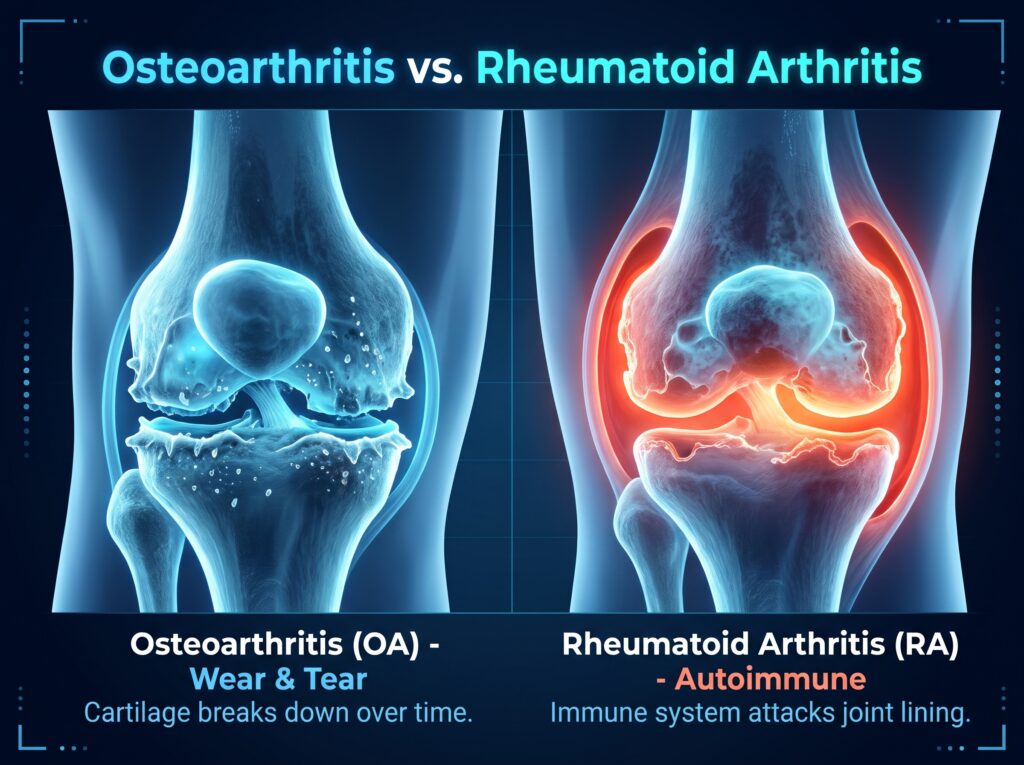
Osteoarthritis (OA)
Osteoarthritis is a degenerative condition affecting the joint cartilage. Any joint can be affected, but it is most common in the weight bearing joints; the hips, knees, feet and spine, and also the base of the thumb joints and the finger joints.
Osteoarthritis – Comprehensive Review article
Rheumatoid arthritis (RA)
Rheumatoid arthritis is an autoimmune disease. The immune system, which normally protects the body against bacteria and viruses, mistakenly attacks the body’s own tissues, in this case the lining of the joints and tendons. It can also affect any joint but is most common in the small joints of the hands and feet.
Other autoimmune diseases include type 1 diabetes, multiple sclerosis (MS) and psoriasis, in which the immune system targets the pancreas, nerves and skin cells respectively. Why the immune system behaves this way in some people is not fully understood.
Do They Have Anything in Common?
Both conditions can cause:
- Joint pain and stiffness
- Changes in the appearance of the hands
- Weakness of grip
Beyond these, the two conditions differ in almost every respect.
What Causes OA and RA?
Osteoarthritis
OA has a clear relationship with age: the older you are, the more likely you are to develop it. Other risk factors include:
- genetics: OA tends to run in families
- being overweight
- an unhealthy lifestyle
- repeated joint injuries
Rheumatoid arthritis
RA is around three times more common in women than men, and most often starts between the ages of 30 and 50, so typically much younger than OA. Something triggers the immune system to attack the cells lining the joints and tendons (the synovium). Possible triggers include physical or emotional stress and viral infections, but the exact cause is not known. Smokers are statistically more likely to develop RA, although the reason is unclear.
How They Differ Around the Body
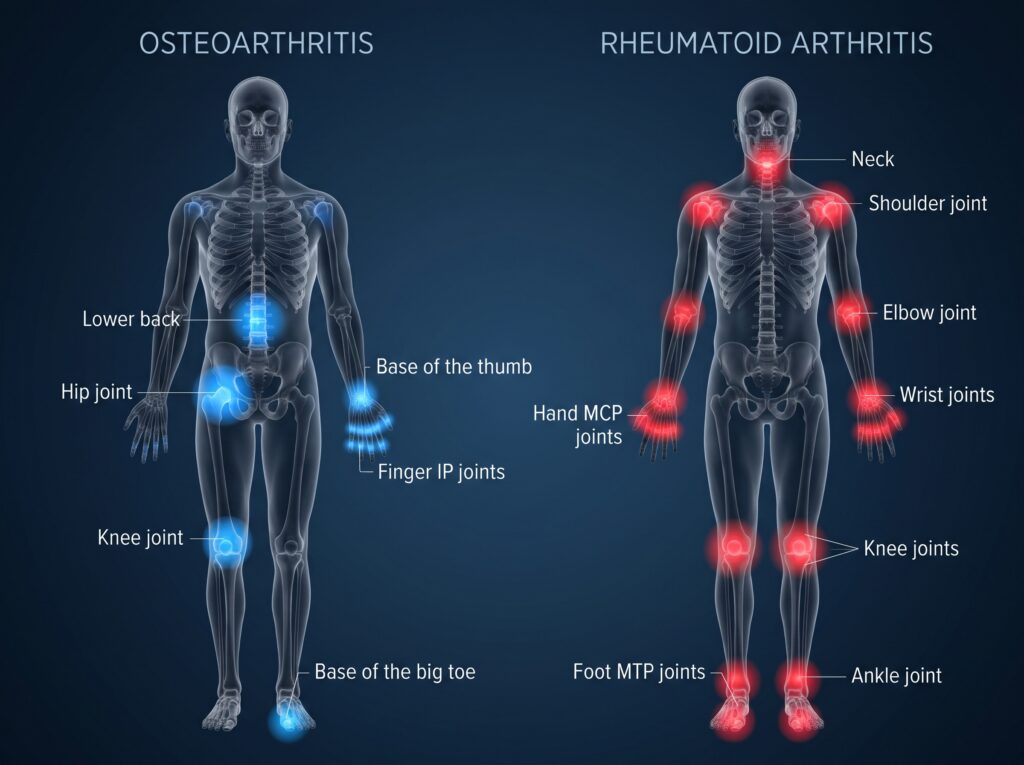
OA most often affects the weight-bearing joints (hips, knees and spine), along with the big toe, base of the thumb and the finger joints. It frequently affects one side more than the other.
RA most often affects the small joints of the hands and feet, together with the wrists, and usually affects both sides of the body in a similar pattern. Larger joints such as the knees, shoulders, elbows and ankles can also be involved. Because RA is a disease of the whole body (systemic), it can also affect other organs, such as the eyes and lungs.
Telling Them Apart in the Hands
Which joints are affected?
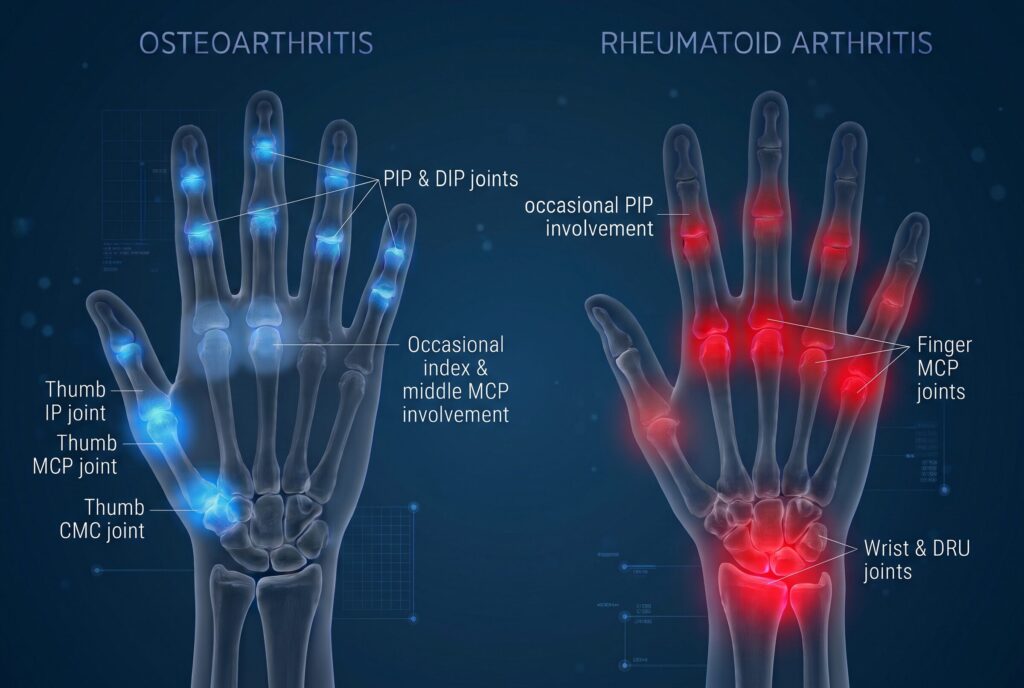
The pattern of affected joints in the hand is one of the clearest differences between the two conditions.
- OA most commonly affects the base of the thumb and the finger joints: the end joints (DIP joints) and middle joints (PIP joints). The knuckles (MCP joints) are much less commonly involved.
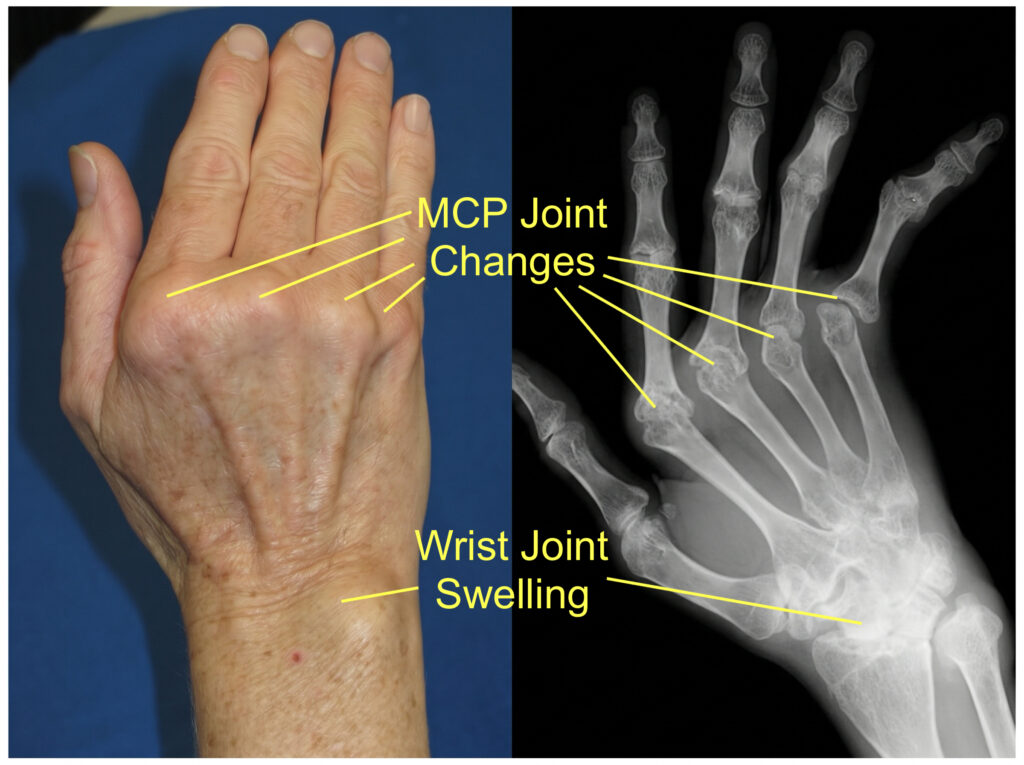
- RA almost always affects the knuckle joints, particularly those of the index and middle fingers, along with the wrists. Away from the hand, the small joints of the forefoot are also commonly affected.
Clinicians use a simple test called the metacarpal squeeze test, gently squeezing across the knuckles, to check whether the knuckle joints are inflamed.
What do the hands look like?
An experienced MSK clinician can often make the diagnosis just by looking at the hands.
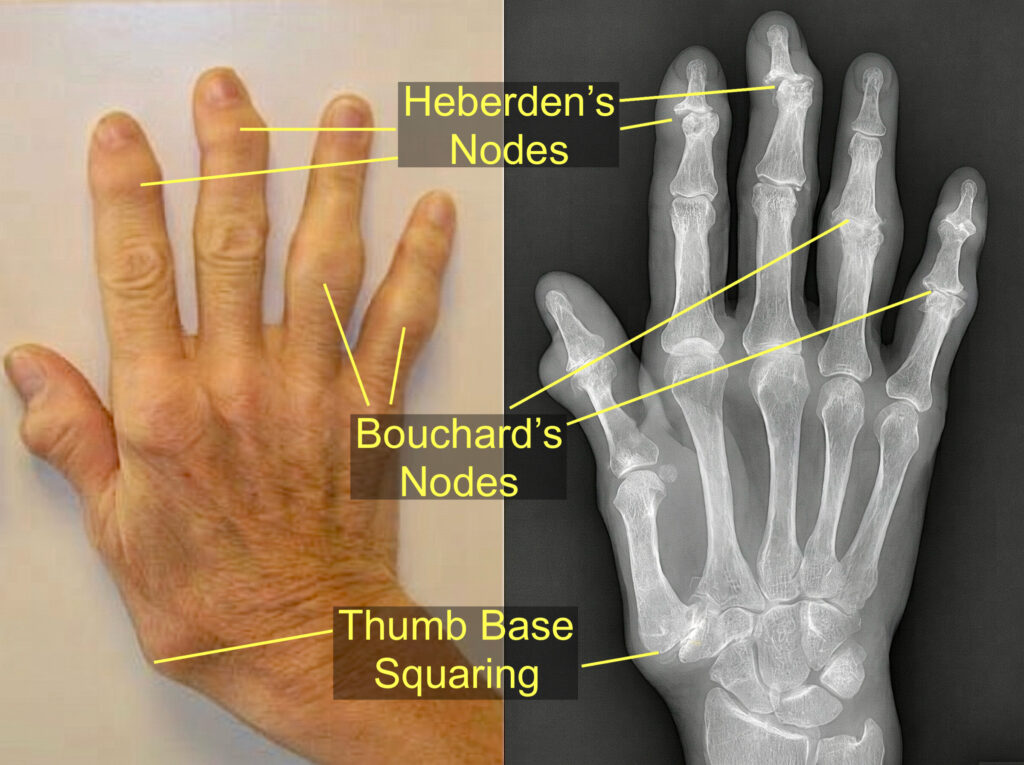
In an OA hand, the finger joints become thickened by bony bumps called arthritic nodes. Nodes at the end joints are called Heberden’s nodes, and those at the middle joints are called Bouchard’s nodes. When the base of the thumb is affected, it can take on a squared appearance, known as “squaring”. Despite the bumps, the fingers usually remain fairly straight.
In an RA hand, the main joints affected are the knuckles, and there may be swelling around the wrist. If RA is left untreated, the fingers can drift sideways towards the little finger, giving a classic windswept appearance known as ulnar drift.
How Do the Symptoms Differ?
Osteoarthritis
The main symptoms of OA are pain and stiffness in the affected joints. Pain is mainly felt with movement, such as bending the fingers or pinch-gripping with the thumb. Turning a key in a stiff lock is a classic example. Morning stiffness usually settles within 30 minutes.
Rheumatoid arthritis
RA also causes joint pain and stiffness, but inflammation is the key feature. The affected joints, particularly the knuckles and wrists, are often swollen and may feel warm to the touch. Pain and stiffness tend to be worse at rest and first thing in the morning, when stiffness can take an hour or two to ease.
Because RA is a systemic inflammatory disease, it can also cause more general symptoms, including:
- Tiredness and fatigue
- Fever
- Dry eyes
- Chest pain
- Loss of appetite and weight loss
At a glance
| Osteoarthritis | Rheumatoid arthritis | |
|---|---|---|
| Type of condition | Degenerative | Autoimmune and inflammatory |
| Typical age of onset | Older age | Most often 30 to 50 |
| Hand joints affected | Thumb base, finger end and middle joints | Knuckles and wrists |
| Other joints commonly affected | Hip, knees, Spine & Big Toe | Small Foot Joints, Elbows, Neck |
| Pattern | Often one side more than the other | Usually both sides, similar pattern |
| Swelling and warmth | Bony thickening; little warmth | Soft swelling, often warm |
| Morning stiffness | Usually under 30 minutes | Often one to two hours |
| Pain pattern | Worse with use | Worse at rest and in the morning |
| General symptoms | None | Fatigue, fever, weight loss and others |
How Are They Diagnosed?
OA is diagnosed from the symptoms, a clinical examination and an X-ray.
RA is usually suspected from the symptoms and examination findings and confirmed with blood tests. These look for markers of inflammation and for specific antibodies associated with RA (rheumatoid factor and anti-CCP antibodies). Not everyone with RA has positive antibody tests, however, so a normal blood test does not completely rule it out, and a rheumatologist’s assessment is important.
It is also possible to have both conditions in the same joints. As far as we know, OA does not cause RA, but the joint damage caused by RA can lead to secondary OA in an affected joint.
When to See a Doctor Promptly
Early treatment is essential in RA to prevent lasting joint damage. See your GP promptly if you have:
- persistent swelling in one or more joints, especially the small joints of the hands or feet
- morning stiffness lasting more than an hour
- joint symptoms on both sides of the body, together with tiredness or feeling generally unwell
How Are They Treated?
Osteoarthritis
Treatment for hand OA, including exercise, splints, injections and self-management strategies, is covered in a separate article.
Hand and Finger Arthritis self-help article
Rheumatoid arthritis
There is no cure for RA, which is a long-term condition, but modern treatments are very effective at controlling it, particularly when started early.
RA is managed by rheumatologists, the specialist doctors who decide the most suitable medication for each patient. The main treatments are medicines that calm the immune response, known as disease-modifying anti-rheumatic drugs (DMARDs). People who need additional treatment may be offered biological therapies or other newer targeted medicines. These treatments have become so effective that the severe hand deformities that were commonplace when I started my training nearly 30 years ago are now rarely seen.
Steroids and anti-inflammatory medicines may also be used for short periods to settle inflammation or a flare-up. Ice and gentle movement can also help to ease inflamed joints.
Other treatments that may be needed include:
- Podiatry for foot pain, including supportive insoles.
- Surgery, such as joint replacement, for a severely damaged joint that has not responded to other treatment.
Managing RA Naturally: Exercise, Diet and Healthy Living
Many people with RA want to know what they can do themselves to manage the condition. Lifestyle measures can make a real difference to pain, stiffness, energy and long-term health. It is important to be clear, however, that they work alongside medical treatment, not instead of it. RA can cause permanent joint damage if the underlying disease is not controlled, and no diet or supplement has been shown to do that job.
Exercise and physical activity
Exercise has the strongest evidence of any self-management approach in RA. Rheumatology guidance, including from the American College of Rheumatology, strongly recommends regular exercise to improve pain, physical function, mobility and energy levels. Physical activity helps to keep joints moving, may reduce inflammatory signalling in the body and helps to counter the muscle loss and fatigue that often accompany RA.
Helpful types of exercise include:
- Aerobic exercise, such as walking or cycling
- Exercise in water, such as swimming or aqua aerobics
- Resistance (strengthening) exercise
- Mind-body exercise, such as yoga or tai chi
Start gently, build up gradually, and scale activity back during a flare rather than stopping altogether.
Diet and weight management
There is no single “RA diet”, but the best evidence supports a Mediterranean-style diet: plenty of vegetables, fruit, whole grains, nuts, seeds, olive oil and oily fish, with fewer processed foods and less added sugar. Studies suggest this can bring modest improvements in pain, joint symptoms and markers of inflammation, and it also benefits heart health, which matters because RA increases cardiovascular risk. The National Rheumatoid Arthritis Society (NRAS) provides practical UK guidance on healthy eating with RA.
More restrictive approaches, such as strict plant-based or elimination diets, have shown mixed or short-lived results and carry a risk of nutritional gaps. They are best avoided unless supervised by a doctor or dietitian.
Maintaining a healthy weight is also worthwhile. Excess weight increases the risk of developing RA, can worsen symptoms and adds strain to the heart and weight-bearing joints.
Healthy living habits
- Stop smoking: smoking increases the risk of developing RA and is linked to more severe disease and a poorer response to treatment.
- Therapy, joint protection and pacing: physiotherapists and occupational therapists can advise on exercise, splints, joint protection techniques, devices that make everyday tasks easier, and pacing activity to manage fatigue.
- Stress and sleep: stress management, relaxation techniques and good sleep habits support overall wellbeing alongside medical care.
Supplements
- Omega-3 (fish oil): omega-3 fatty acids from oily fish or fish oil supplements have modest evidence for reducing tender and swollen joints and morning stiffness. Any benefit can take up to three months to appear.
- Prescribed supplements: folic acid is routinely prescribed alongside methotrexate to reduce side effects, and vitamin D or calcium may be advised for bone health, particularly if steroids are used.
- Weak or mixed evidence: supplements such as turmeric (curcumin), gamma-linolenic acid (GLA) and glucosamine have limited or inconsistent evidence in RA. The American College of Rheumatology advises against routine use of dietary supplements.
Always check with your GP, pharmacist or rheumatology team before starting a supplement, as some can interact with RA medication or cause side effects.
Common Questions
1. Can I have both OA and RA?
Yes. Both conditions can occur together, sometimes in the same joint. RA can damage a joint and lead to secondary OA, although OA does not cause RA.
2. Does a normal blood test rule out RA?
Not completely. Most people with RA have abnormal blood tests, but some do not. If your symptoms strongly suggest RA, a rheumatologist may still make the diagnosis.
3. Why are my finger joints knobbly?
Bony bumps at the end and middle finger joints (Heberden’s and Bouchard’s nodes) are a classic sign of hand OA rather than RA.
4. Is morning stiffness a sign of RA?
Stiffness lasting more than an hour each morning is more typical of RA. In OA, morning stiffness usually eases within 30 minutes.
5. Can RA be cured?
No, but modern treatments can control it very effectively, especially when started early. This is why prompt diagnosis is so important.
6. Can I manage RA naturally, without medication?
Exercise, a Mediterranean-style diet, a healthy weight and stopping smoking can all help, but they should be used alongside medical treatment, not as a replacement. Uncontrolled RA can cause permanent joint damage, so it is important to work with a rheumatology team.
Summary
- OA is a degenerative joint condition linked to age; RA is an autoimmune disease that most often starts between 30 and 50, and is more common in women.
- In the hands, OA mainly affects the thumb base and finger joints, causing bony nodes; RA mainly affects the knuckles and wrists, causing soft, warm swelling.
- RA causes prolonged morning stiffness and general symptoms such as fatigue; OA stiffness usually eases within 30 minutes.
- OA is diagnosed by examination and X-ray; RA is confirmed with blood tests and a rheumatologist’s assessment.
- Exercise, a Mediterranean-style diet, a healthy weight and stopping smoking all help in RA, alongside (not instead of) medical treatment.
- RA cannot be cured, but modern treatment is highly effective, so if you think you might have RA, see a healthcare professional promptly.
The information can also be seen in video format below.
This article is for general information only and does not replace individual assessment. Start any exercise gently and stop if your symptoms worsen significantly. If you have severe or rapidly worsening symptoms, or you’re concerned about your health, please seek urgent advice from a qualified healthcare professional. See our full disclaimer for more information.