
Scaphoid Fracture: Symptoms, Diagnosis, Treatment and Why It Matters
By Stephen Bunting, Specialist MSK Physiotherapist.
Wrist pain after a fall or a high-energy sports injury is incredibly common. Most of the time, it settles down with a bit of rest. But occasionally, it’s something we take much more seriously.
Hidden amongst all the ligament sprains and minor fractures is one small bone that can cause a disproportionate amount of trouble when it’s injured—the scaphoid.
In this article, we’ll cover what a scaphoid fracture is, why it’s clinically important, how it’s diagnosed, the treatment options available, and what can happen if it’s missed or left untreated.
The Information is also presented in video format below.
What Is the Scaphoid?
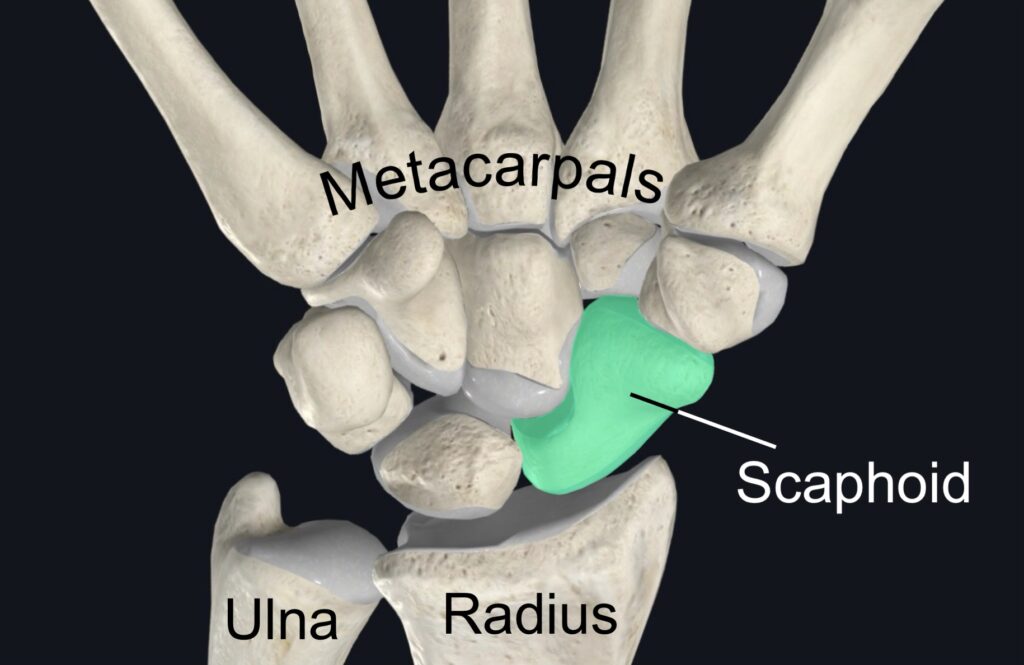
The scaphoid is one of the small carpal bones in your wrist. These bones sit between the forearm (radius and ulna) and the metacarpals of the hand.
There are two rows of carpal bones—proximal and distal—and the scaphoid plays a key role in linking these two rows together. You can think of it as a structural “keystone” in the wrist.
What Causes a Scaphoid Fracture?
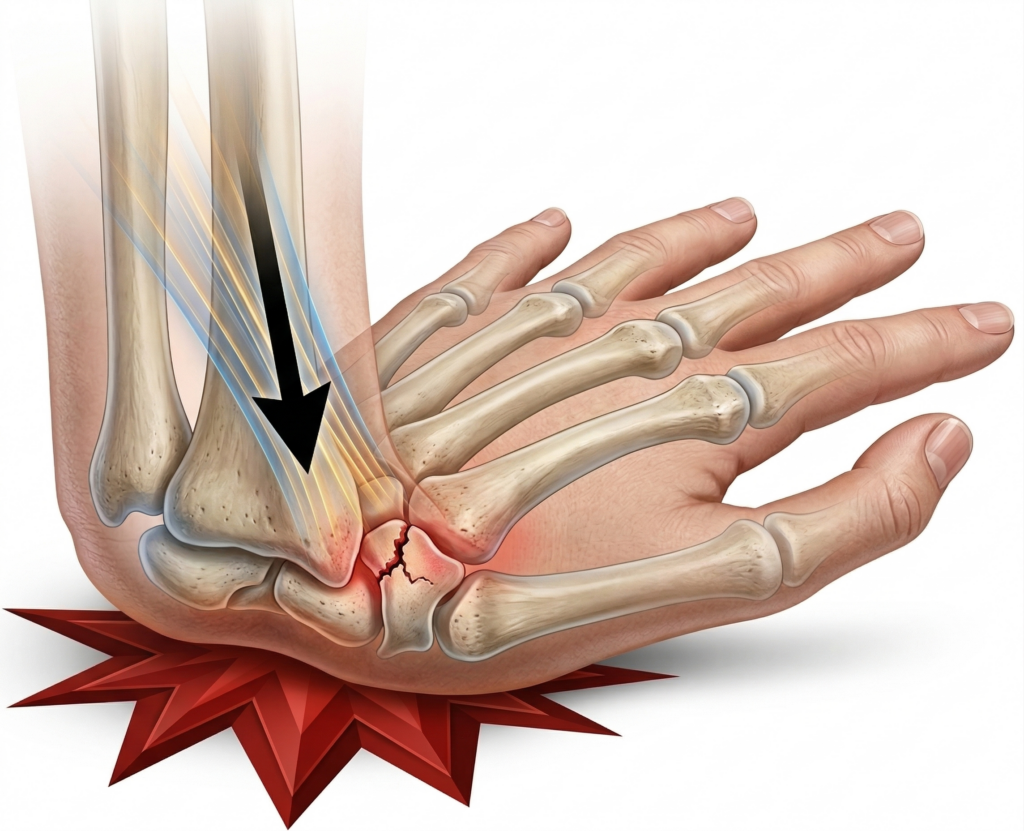
The most common cause is a fall onto an outstretched hand, where the wrist bends backwards as you try to break the fall.
This force is transmitted directly through the scaphoid.
Other common causes include:
- Sports injuries
- Cycling accidents
- Punching injuries (including impact machines)
Scaphoid fractures are most common in younger, active individuals, whereas older adults are more likely to sustain a distal radius fracture (often called a Colles fracture).
Why Are Scaphoid Fractures a Big Deal?
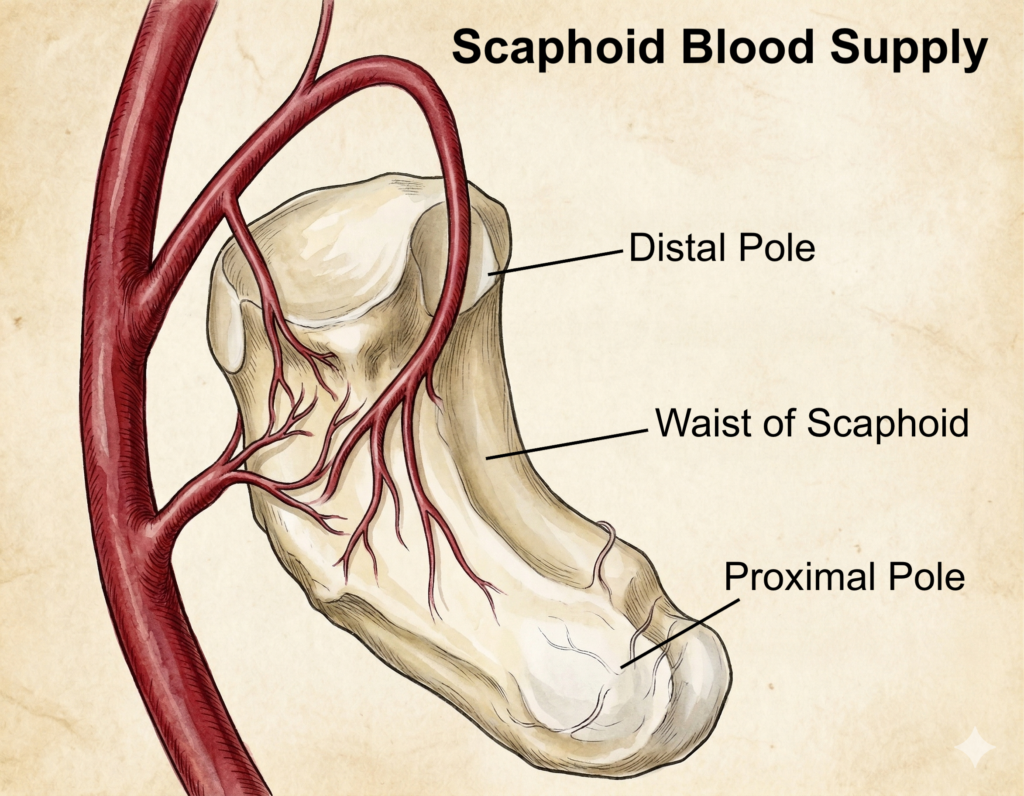
The main reason we worry about scaphoid fractures is its unique blood supply.
- Most of the blood enters the bone from the distal (thumb) side
- It then travels back towards the proximal (wrist) side
If the bone is fractured, this blood supply can be disrupted—particularly in fractures closer to the wrist.
This creates a risk of:
- Delayed healing
- Non-union (failure of the bone to heal)
- Avascular necrosis (bone death due to lack of blood supply)
So unlike many fractures, this isn’t just about pain—it’s about whether the bone can heal properly.
Signs and Symptoms of a Scaphoid Fracture
Common symptoms include:
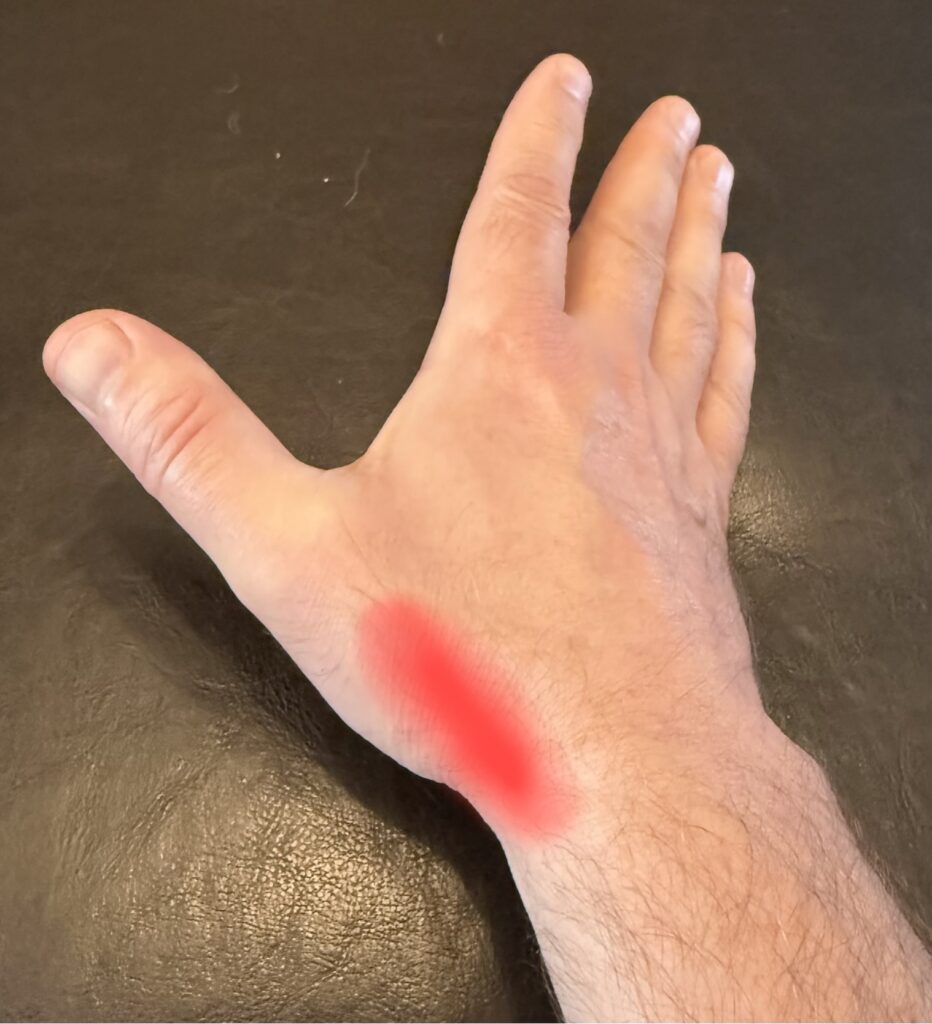
- Pain at the base of the thumb
- Tenderness in the “anatomical snuffbox”
- Pain with gripping or pinching
- Reduced wrist movement
Importantly:
- You may still be able to move your wrist
- Swelling can be minimal
- Bruising is often absent
This is why scaphoid fractures are frequently missed early on.
How Is a Scaphoid Fracture Diagnosed?
If a scaphoid fracture is suspected, an X-ray is usually the first step.
However, these fractures can be difficult to see initially and may not show up at all in the early stages.

If there is strong clinical suspicion:
- You may be treated as if it is fractured (with a splint or cast)
- Repeat X-rays may be performed after 10–14 days
- Or more advanced imaging may be arranged, such as:
- MRI scan (most sensitive early on)
- CT scan
Treatment Options
Conservative (Non-Surgical) Treatment
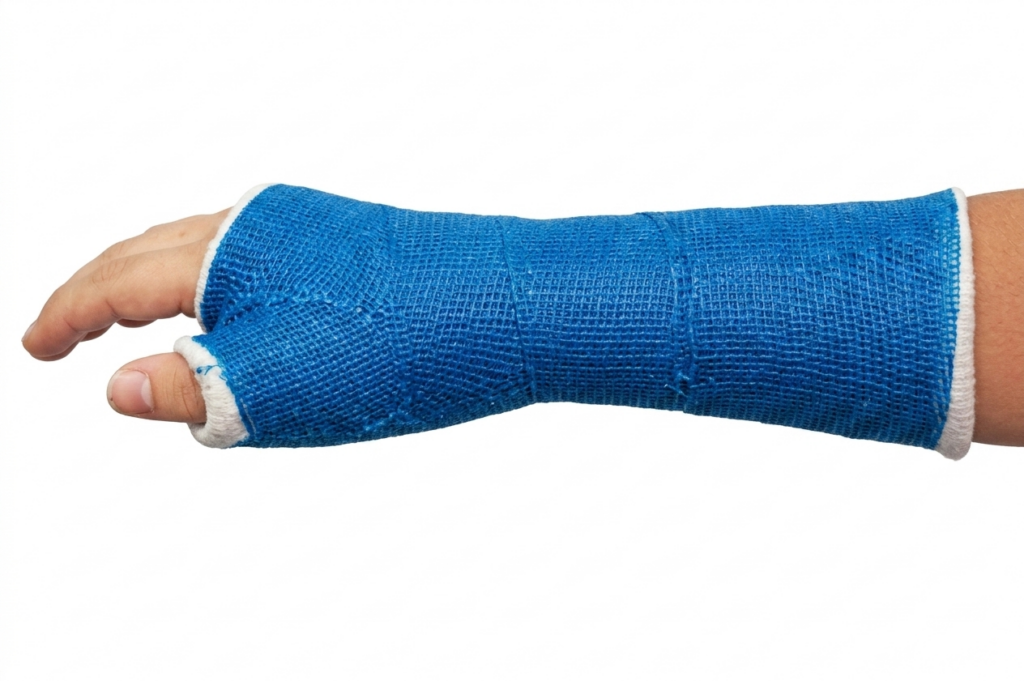
Many scaphoid fractures can be managed without surgery.
This typically involves:
- Immobilisation in a cast or splint
- Usually for 6–12 weeks, sometimes longer
Fractures in the distal (thumb-side) part of the bone tend to heal more reliably due to a better blood supply.
Surgical Treatment
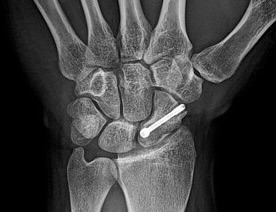
Surgery may be recommended if:
- The fracture is displaced (the bone has moved)
- It is located in a higher-risk area (closer to the wrist/proximal pole)
- There are concerns about healing
- The patient has risk factors (e.g. smoking, diabetes, vascular disease)
- A quicker return to activity is required (e.g. in athletes)
Surgery usually involves inserting a screw to stabilise the bone and promote healing.
Rehabilitation and Recovery
Whether treated surgically or conservatively, immobilisation is required.
During this time, it’s important to:
- Maintain movement in the shoulder, elbow, and fingers
- Begin wrist rehabilitation once the cast is removed
After immobilisation, it’s common to experience:
- Wrist stiffness
- Weakness
- Reduced grip strength
Following a structured rehabilitation programme is key to recovery.
A full exercise programme for wrist fractures including scaphoid fractures can be seen in the video below.
Prognosis
With early diagnosis and appropriate treatment, most scaphoid fractures heal well.
However:
- Healing is often slower than other wrist fractures
- Immobilisation may be prolonged
- Stiffness is a common complication
Adhering to rehabilitation advice is essential for the best outcome.
What Happens If a Scaphoid Fracture Is Missed?
If left untreated, a scaphoid fracture can lead to serious long-term problems:
- Non-union (the bone fails to heal)
- Avascular necrosis (bone death)
- Progressive wrist arthritis
Over time, this can result in:
- Chronic pain
- Stiffness
- Loss of function
This may progress to a condition known as SNAC wrist (Scaphoid Nonunion Advanced Collapse), where the wrist develops severe arthritis.
At this stage, treatment often involves complex surgery, such as partial or total wrist fusion, which permanently reduces wrist movement to control pain.
Key Takeaway
If you’ve fallen onto your hand and have pain around the base of your thumb—even if it doesn’t seem severe—it’s important to get it assessed.
Scaphoid fractures are easy to miss early on, but much more difficult to treat if diagnosis is delayed.
This article is for general information only and does not replace individual assessment. If you’re concerned about your symptoms, please consult a qualified healthcare professional. See our full medical disclaimer.